
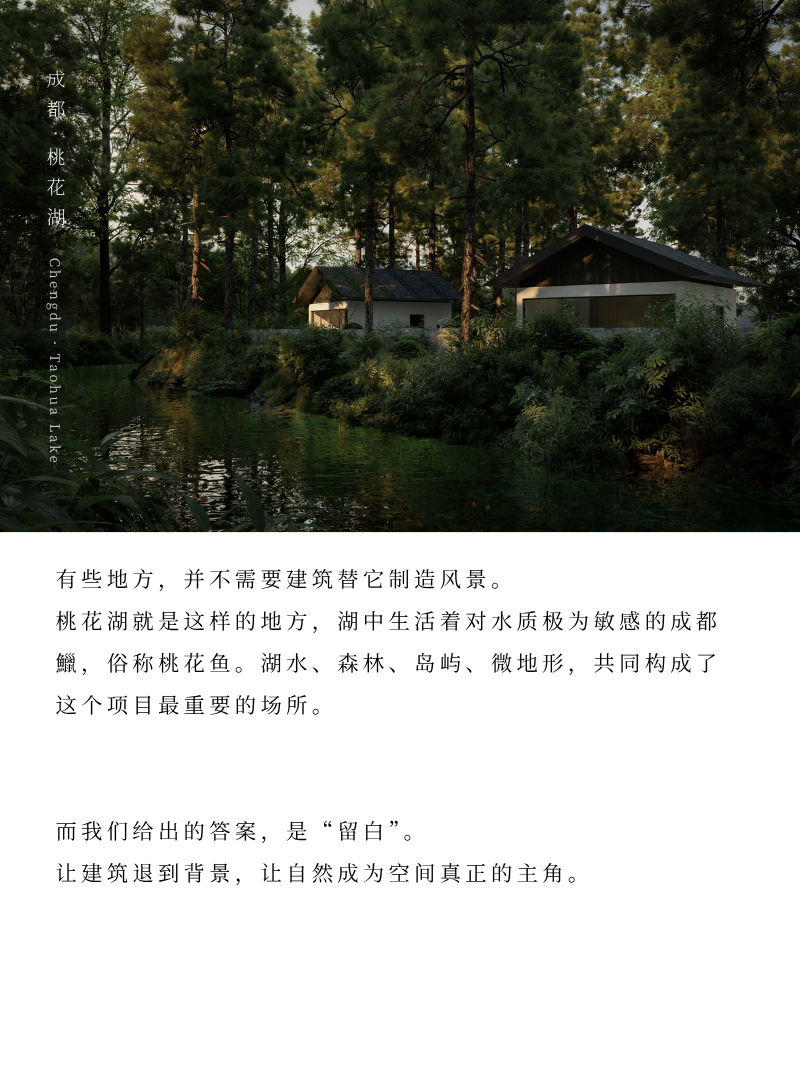
In some cases, buildings do not need to create scenery for themselves.
The Taohua Lake is such a place. The lake is home to the extremely sensitive Chengdu species, commonly known as the Taohua water, forest, islands, and micro-topography. Together, they form the most important space of this project.
For the design, the first question that comes to mind is not "What kind of hotel should we build?", but when nature itself is already so captivating, what exactly should the building do?
And our answer is "Leave blank space".
Let the building recede to the background, and let nature become the true protagonist of the space.

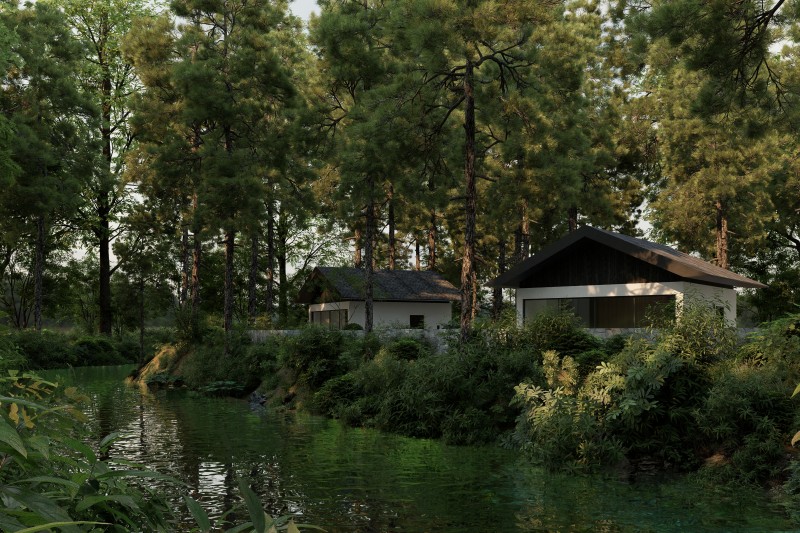
设计没有按照传统方式去设计一栋完整的大体量酒店,而是将客房拆解成十余栋独立的小体量,散落于岛屿与林木之间。每栋约60㎡,建筑之间保持足够的间距,让湖岸、树木和视线自然穿行其中。
这样做,改变的不只是建筑的形态。
The design did not create a complete large-scale hotel in the traditional way. Instead, the guest rooms were divided into over ten independent small buildings, scattered among the islands and forests. Each building was approximately 60 square meters in size. The buildings maintained sufficient spacing from each other, allowing the lake shore, trees, and views to flow naturally through them.
This approach changed not only the form of the building.
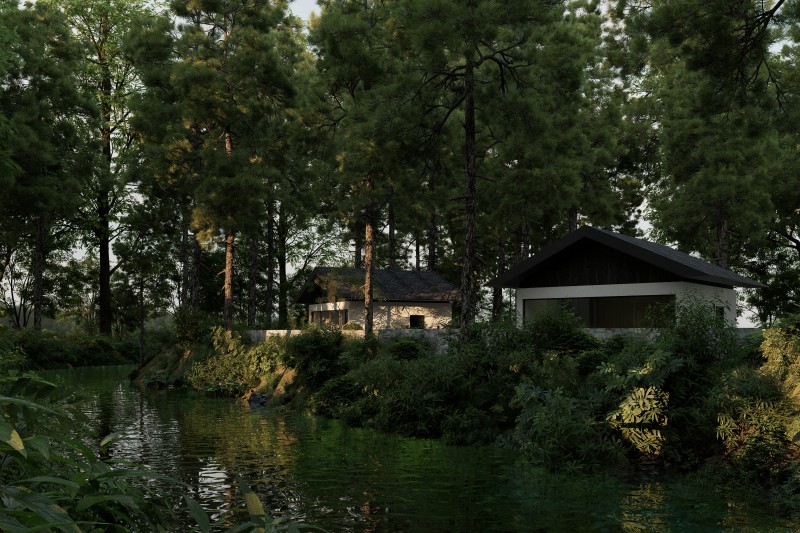
当建筑被拆散,人的体验也随之发生变化。客房不再是排列整齐的“房间”,而成为隐藏在自然中的一个个独立居所。建筑之间留下的空隙,则成为风、光、视线和人的活动可以进入的地方。
设计的不只是建筑,也包括建筑之间的林间体验。
When the buildings are dismantled, people's experiences also change. Guest rooms are no longer neatly arranged "rooms", but instead become individual dwellings hidden within nature. The gaps left between the buildings become places where wind, light, sight, and human activities can enter.
The design is not only for the buildings, but also for the forest experience between the buildings.
This is the first time that "white space" has occurred.
The design starts from the site, extracts the simple roof, cornices and material relationships in the Sichuan folk houses, and then reorganizes them with more concise modern volumes, making the buildings have the regional temperament while not overly emphasizing themselves.
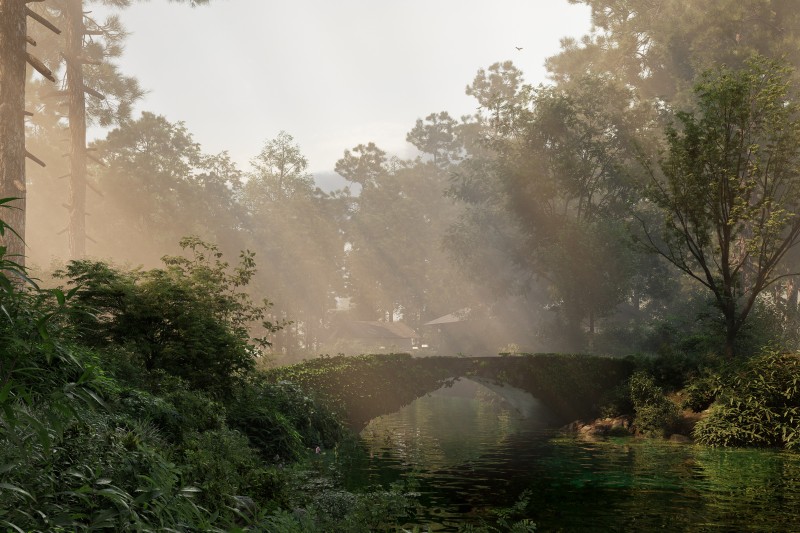
The vacation experience doesn't begin at the moment you open the door. From the moment you step onto the island, the space gradually alters your state of mind.
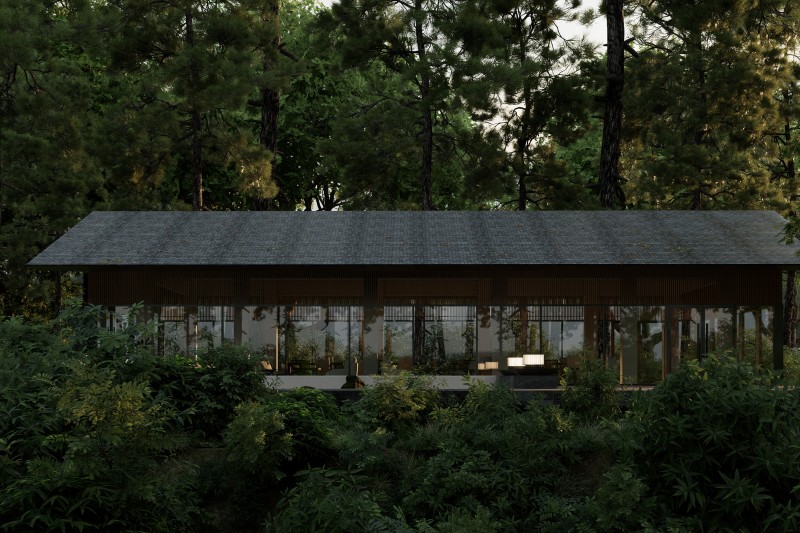
The reception area, dining room, and leisure spaces are organized into several interrelated public nodes. The building, the woods, and the lake shore together form a path that one can wander along. Throughout the experience, people encounter nature and gradually leave the original space.
Therefore, the flow of movement here doesn't rush to send people to their destinations. It is more like allowing urban life to slow down.
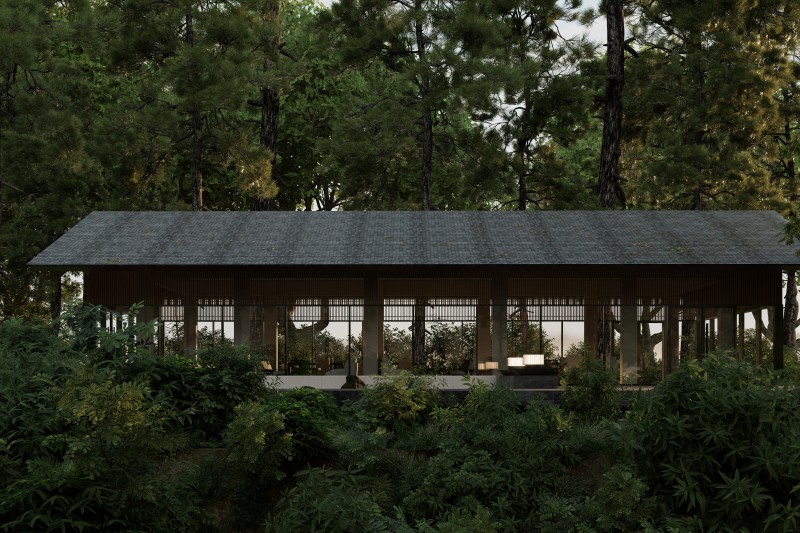
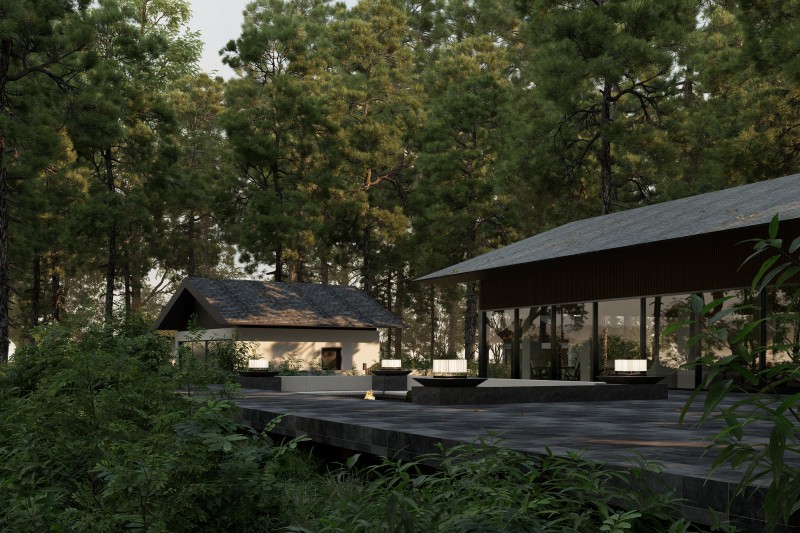
餐厅也没有追求传统酒店的大尺度与规模感,而是更强调小团体用餐、庭院与自然之间的关系。窗外的湖水、树影和天气,本身就是空间的一部分。
设计所做的,是给自然留下足够的位置。
The restaurant does not pursue the grand scale and sense of size typical of traditional hotels. Instead, it places greater emphasis on small group dining, the relationship between the courtyard and nature. The lake water, tree shadows and weather outside the window are themselves part of the space.
What the design does is to leave sufficient space for nature.

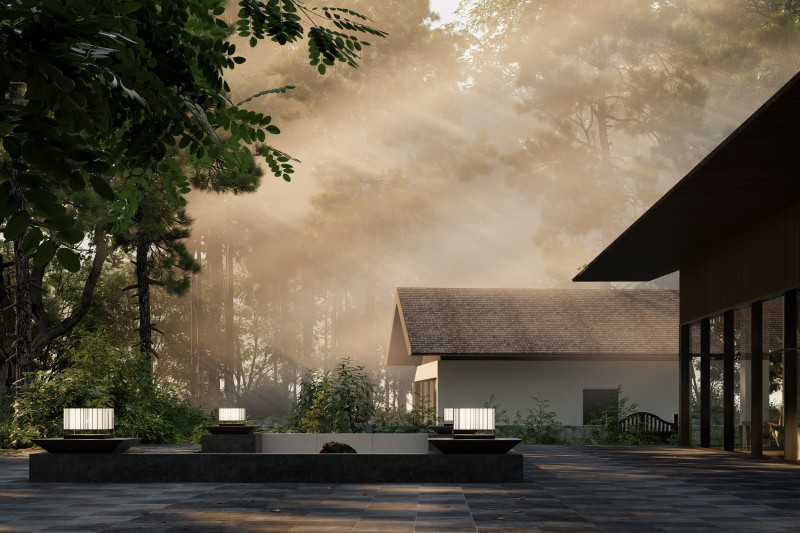
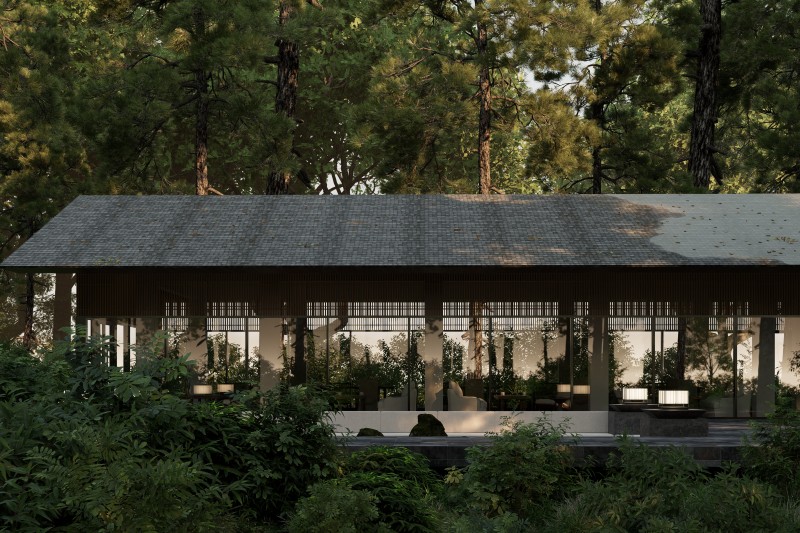
从收,到放;从安静,到开阔。
这不是形式上的变化,而是一种空间情绪的设计。When entering the dining and living area, large areas of glass bring the lake and the forest into the room. The spaces on both sides receive ample lighting, and people's line of sight also returns to nature from the local perspective.
From collection to release; from tranquility to openness.
This is not a change in form, but a design of spatial mood.
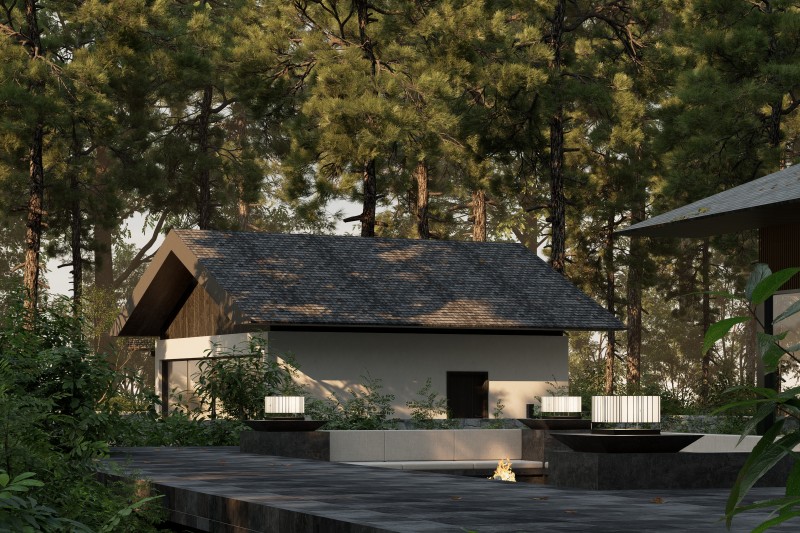
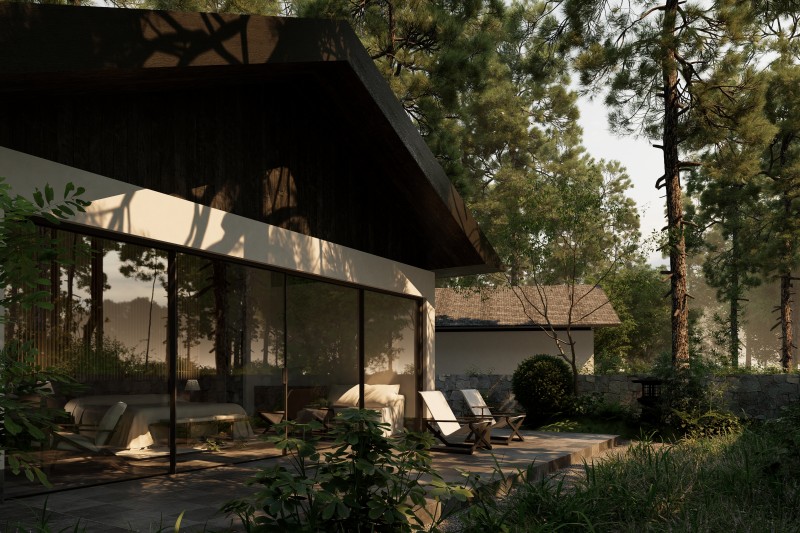
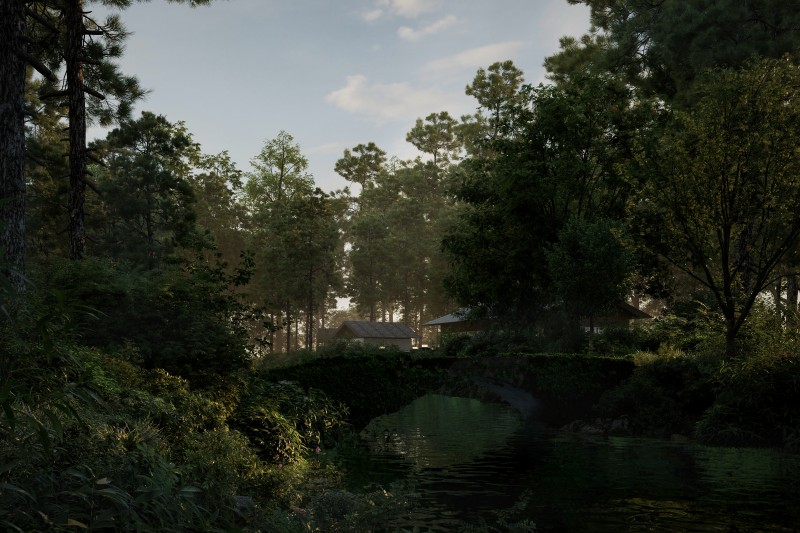
所以这里的窗,并不只是为了采光。
它更像是一种观看自然的方式。
有些地方需要大面积玻璃,让湖面成为完整的远景;有些地方则通过墙体、屋檐和树木形成框景,让视线停留在某一处具体的风景。
晨光、树影、云层和湖面的变化,会随着时间进入室内。
So the windows here are not merely for lighting; they are more like a way of observing nature.
In some places, large areas of glass are needed to make the lake surface a complete background; in other places, frames are formed by walls, eaves and trees, allowing the viewer's gaze to rest on a specific scenic spot.
The changes of morning light, tree shadows, clouds and the lake surface will enter the interior over time.
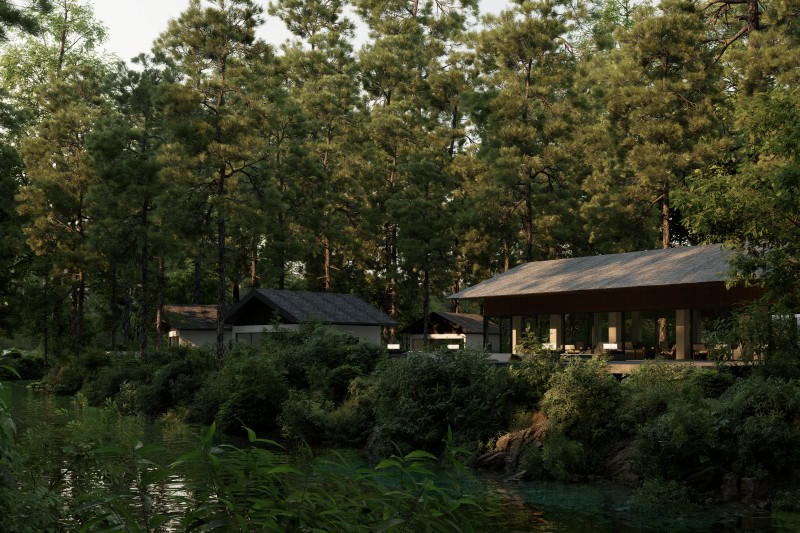
建筑不再试图制造一个永远不变的“完美场景”,而是把自然本身交给时间。
这也是设计中所强调的“借景”与“留白”:让建筑成为取景框,同时克制空间中的装饰,让真正有价值的风景拥有呼吸的余地。
最终,我们希望留下的并不是一座有强烈存在感的酒店,而是一处可以让人慢下来的地方。
The building no longer attempts to create an unchanging "perfect scene", but hands over nature itself to time.
This is also what is emphasized in the design - "borrowing scenery" and "leaving blank spaces": making the building the frame for capturing the scenery, while restraining the decoration in the space, allowing the truly valuable scenery to have room to breathe.
Ultimately, what we hope to leave behind is not a hotel with a strong presence, but a place where people can slow down.
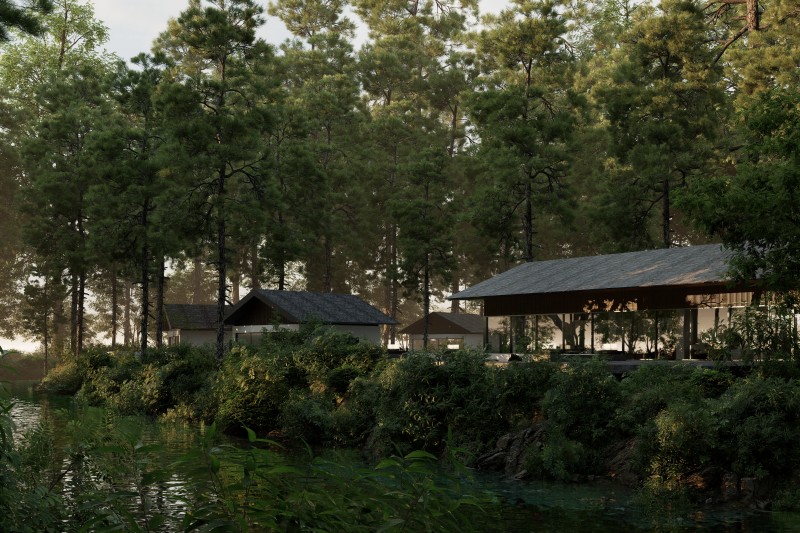
建筑退后一点,湖水便走近一点;空间安静一点,人的感受便清晰一点。
所谓“留白”,不是把空间做空,而是知道什么应该留下,什么可以退场。
让建筑退到自然之中,让自然进入生活。
也让每一个来到这里的人,在湖光、树影与时间之间,找到属于自己的“归处”。
Move the building back a little, and the lake will come closer; make the space quieter, and people's perception will become clearer.
The so-called "leaving blank" is not about making the space empty; rather, it's about knowing what should be retained and what can be left out.
Let the building retreat into nature, and let nature enter into life.
And also, for everyone who comes here, in the midst of the lake's reflection, the shadows of trees, and time, find their own "place of return".
-TranMadison-
- 上一篇:为什么你看到的极简,最后都变成了简陋?|『藤麦·洞见』
- 下一篇:已经没有了